image
The Universe’s Dark Eternity and the Phantom Menace of Primordial Black Holes: Bridging Cosmic Scales
Part 1: Unveiling the Universe’s “Dark Eternity” – A Physicist’s Vision of Endless Void
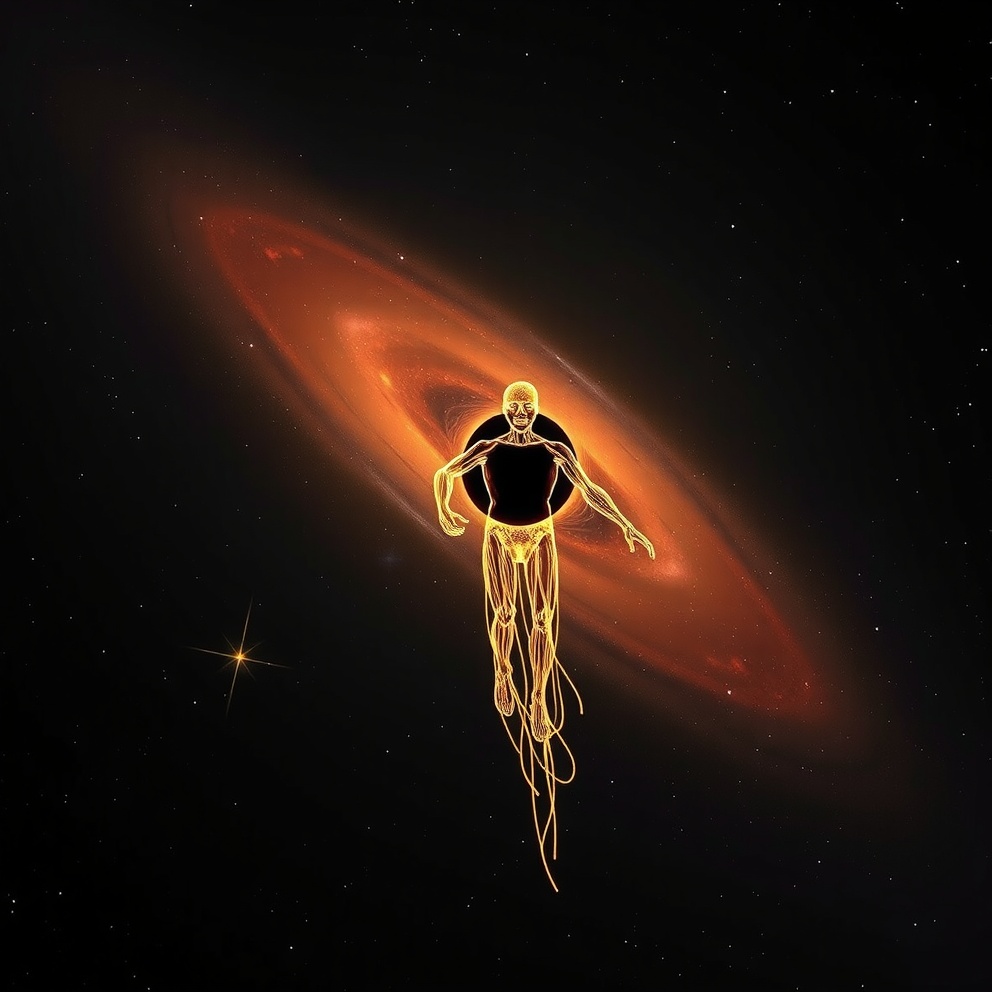
In a profound meditation on cosmic destiny, astrophysicist Abraham Loeb, drawing from foundational principles of modern cosmology, paints a chilling yet mesmerizing portrait of the universe’s distant future not as a cataclysmic “end,” but as an interminable “dark eternity.” Born from the fiery crucible of the Big Bang approximately 14 billion years ago, our universe has unfurled through epochs of radiant starlight, galaxy-spanning drama, and the relentless march of entropy. Yet, as Loeb elucidates, this grand narrative hurtles toward a twilight phase where the accelerating expansion propelled inexorably by the enigmatic force of dark energy, which constitutes about 68% of the cosmos’s energy density stretches space itself into an ever-thinning fabric.
Stars like our Sun, destined to bloat into red giants before collapsing into white dwarfs in roughly 5 billion years, will dwindle into the faintest red dwarfs, their fusion hearts flickering out after trillions of years. Star formation, the engine of cosmic vibrancy, will grind to a halt as gas clouds dissipate into the void, starved by the expansion that dilutes matter density to negligible levels.
Galaxies, those majestic island universes, will undergo a slow-motion merger frenzy. In the Local Group, encompassing the Milky Way, Andromeda, and dozens of smaller satellites, gravitational tugs will coalesce them into a colossal elliptical galaxy, a bloated relic shorn of spiral arms and stellar nurseries. Beyond this local bastion, the observable universe will dissolve into isolation: accelerating expansion ensures that distant galaxies recede faster than light, slipping beyond our event horizon, their light forever redshifted into oblivion. From an Earth-like vantage in this far future should any remnant civilization endure the night sky would offer a desolate vista: an endless black expanse punctuated solely by the dim, ruddy glow of our solitary supergalaxy, adrift in a starless sea. This “dark eternity” evokes the heat death scenario from thermodynamics, where maximum entropy reigns, temperatures plummet toward absolute zero, and quantum fluctuations in the vacuum become the only whispers of activity. Protons themselves may decay after 10^34 to 10^36 years, dissolving atoms into radiation, leaving a soup of photons and leptons in perpetual chill.
Yet, Loeb emphasizes a poignant optimism amid this gloom: our current epoch, a mere blip in cosmic chronology (spanning roughly 10^10 years of stellar heyday), represents a singular “window of discovery.” Telescopes like the James Webb Space Telescope (JWST) and upcoming surveys such as the Vera C. Rubin Observatory pierce this veil, revealing high-redshift galaxies and primordial light that illuminate the universe’s infancy. This fleeting observational golden age affords humanity unprecedented insights potentially upending the dark eternity narrative through discoveries in quantum gravity, modified dark energy models (like quintessence), or even evidence of a multiverse. Speculatively, if dark energy wanes or reverses (as in phantom energy “Big Rip” alternatives or cyclic bounce cosmologies), the void might yield to rebirth. From philosophical perspectives, this vista challenges anthropocentrism: we are not the universe’s climax but a transient observer in its vast autobiography, urging intensified space exploration before the lights dim. Economically, it galvanizes investment in megastructures like Dyson spheres to harvest fleeting stellar output, while culturally, it inspires art and literature from Lovecraftian voids to Kubrick-esque odysseys reframing human purpose as defiant inquiry into infinity.
Part 2: Primordial Black Holes – Microscopic Cosmic Bullets and Their Improbable Perils
Shifting from the grand tapestry of cosmic fate to the razor-edge of quantum peril, physicist Robert Scherrer of Vanderbilt University delivers a riveting analysis of primordial black holes (PBHs) hypothetical relics forged in the Big Bang’s quantum foam, potentially comprising a fraction of dark matter. These minuscule singularities, born from density fluctuations at Planck scales (10^-35 meters), evade detection yet haunt theoretical physics with their dual nature: evaporating via Hawking radiation while wielding tidal forces on macroscopic scales. Scherrer’s 2021 paper meticulously models their interaction with human anatomy, revealing a spectrum of damage scaled by mass, all underscored by probabilities so vanishingly small they border on the metaphysical.
Consider a PBH of modest heft, say 10^12 kilograms (roughly Mount Everest’s mass but compressed to atomic nucleus size, about 10^-15 meters across). Zipping through the body at near-light speeds undetectable until impact it induces shock waves akin to a subsonic rifle round. Scherrer calculates that a 1.4 × 10^11 metric ton PBH (140 billion tons) generates hydrodynamic effects mirroring a .22-caliber bullet: a narrow cavitation tunnel through flesh, rupturing cells via pressure gradients of ~10^9 Pascals, with secondary blast waves fragmenting nearby tissues. Entry and exit wounds would mimic gunshot trauma, yet without fragmentation or recoil, the victim might survive with surgical intervention odds of such an event? Once every 10^18 years per person, given PBH flux estimates from dark matter density (~0.3 GeV/cm³) and galactic velocities (~220 km/s).
Escalating the stakes, a heftier PBH at 7 × 10^12 tons unleashes “spaghettification” the gruesome tidal stretching predicted by general relativity. As the hole approaches, differential gravity across the body (Δg ~ GM/r^3) elongates tissues like cosmic pasta, with arms and legs yanked apart before the torso implodes into the event horizon. Simulations depict cellular membranes shearing at accelerations exceeding 10^12 g, vaporizing organs in femtoseconds; survival is nil. Even planetary traversals pose risks: a 10^18 kg PBH could drill through Earth, triggering seismic cataclysms or atmospheric ignition via Hawking-evaporated particle sprays. Yet, rarity reigns supreme Earth-impact odds hover at 10^-100 per year, dwarfing asteroid threats. Detection eludes us: PBHs masquerade via femto-lensing (brief starlight distortions, hunted by JWST) or anomalous heat in dark matter detectors like XENONnT.
From risk-assessment lenses, Scherrer’s work reframes existential threats: not Hollywood black holes gobbling worlds, but quantum needles threading reality’s fabric. Biologically, it probes vulnerability human bodies, evolved over 4 billion years, stand oblivious to Planck-scale incursions. Speculatively, historical “mysteries” like Tunguska (1908) or micro-explosions might whisper PBH passages, though evidence favors prosaic causes. This underscores cosmology’s human touch: the macro-Big Bang births micro-assassins, demanding vigilant detectors amid our “now or never” epoch.
Part 3: Microcosm-Macrocosm Nexus: Dark Eternity and Primordial Black Holes as Cosmic Threads
Core Analytical Connections: Quantum Bridges Across Scales
The confluence of “dark eternity” and PBHs resurrects the ancient Hermetic axiom as above, so below, forging a modern nexus where microcosmic quantum quirks defy macrocosmic fatalism. Dark eternity’s heat-death tableau accelerated expansion yielding starless voids amid lingering vacuum fluctuations collides with PBHs, Big Bang-spawned quanta that blend Planck-scale volatility with tidal disruptions. This intersection mandates multi-disciplinary research, uniting cosmology, quantum field theory, biology, and even geopolitics to probe how subatomic fizzles might rewrite galactic obituaries.
Central to this is quantum gravity as unifier: string theory, loop quantum gravity, and AdS/CFT holography posit that micro-fluctuations (10^-43 seconds, Planck time) underpin macro-structure. Dark eternity presumes static dark energy (cosmological constant Λ ~10^-52 m^-2), but PBHs incarnate vacuum dynamism Hawking radiation extracts particle-antiparticle pairs from event horizons, embodying quantum tunneling from “nothing.” Scherrer’s models peg PBH masses (10^11-10^18 tons for 1-second-to-billion-year lifetimes) to dark matter’s 10-30% fraction, per microlensing surveys (e.g., HSC/OGLE). Speculatively, evaporating PBH swarms could jitter Λ locally, imprinting “wiggles” in cosmic microwave background or expansion history detectable via LSST’s 10-year survey or Euclid’s spectroscopic mapping. This feedback loop counters entropy: PBH radiation injects complexity into dilution, birthing patchy structure where uniformity reigned.
Entropy’s paradox sharpens the link macro-heat death (10^100 years, post-proton decay) echoes micro-particle reversibility, resolved via black hole information paradoxes. Holographic duality suggests PBH networks encode cosmic history on their horizons, holographically rebooting post-expansion via emergent complexity. Human-scale intrusions amplify urgency: PBH “bullet” odds (10^-30/year) mirror our meso-scale fragility in dark eternity’s timeline, speculatively catalyzing evolution through DNA-mutating radiations, explaining quantum coherence in avian magnetoreception or photosynthetic efficiency.
| Connection Theme | Dark Eternity Element | PBH Element | Unified Implication | ||
|---|---|---|---|---|---|
| Vacuum Energy | Drives eternal expansion | Hawking radiation source | PBHs as dynamic Λ modulators; cyclic cosmology trigger | ||
| Scale Intersection | Quantum fluctuations persist in void | Micro-BHs shred macro-objects | Emergent complexity from chaos; no true “death” | ||
| Observational Urgency | Stars fade in 10^12 years | Femto-lensing now (JWST) | Cross-sect detectors before isolation | ||
| Risk Profile | Galaxy isolation | Body/planet traversals | Improbable but total: anthropic fine-tuning |
Worldwide Implications: From Labs to Geopolitics
This nexus ripples globally, demanding cross-sect paradigms before our window closes. Scientifically, it fuels revolutions: NSF’s “It from Qubit” and EU Horizon Europe allocate billions for PBH-gravity sims fused with DESI dark energy probes. LHC/LIGO/XENON pivot to PBH hunts via excess heat or gravitational waves, potentially shattering the Standard Model and birthing vacuum-energy tech PBH analogs powering fusion reactors, slashing 2050 energy crises.
Planetary defense elevates PBHs above asteroids: a 10^18 kg “Earth-bomb” (10^-100 odds) integrates into Oxford’s existential risk frameworks, spurring UN Artemis Accords for neutrino/PBH arrays. US-China-EU rivalries echo Apollo, with victors claiming gravity-wave IP. Biologically, PBH sims illuminate quantum biology, yielding anti-aging therapies via micro-gravity tweaks; philosophically, PBHs bolster simulation arguments we might inhabit a PBH’s evaporative glow. Culturally, sci-fi booms (PBH pandemics in novels), ethicists debate “eternal night” policies Dyson swarms or multiverse bets?
Economically/geopolitically, stakes hit trillions: LISA/JWST successors detect femto-lensing, valuing dark matter at $10T. Wormhole tech from entangled PBHs could hyperlink colonies, transmuting trade wars into cosmic pacts.
Speculative Visions: Rewriting the Cosmic Script
Fuse into PBH-Driven Cyclic Eternity: Void-bound PBHs cluster via modified gravity (MOND tweaks), their explosions seeding mini-Big Bangs teased in Scherrer’s papers and quintessence. Post-stellar life uploads to PBH networks, Penrose-style. Wildcard: We’re in a PBH, its 10^100-year evaporation mirroring heat death.
Global Timeline Pressure:
| Horizon | Threat/Opportunity | Action |
| Now-2030 | PBH femto-lensing; Λ wiggles | Fund Euclid/LSST + AI sims |
| 10^12 years | Star fade; PBH swarms rise | Wormhole tech or exodus |
| 10^12 years | Proton decay; PBH explosions | Holographic migration |
Catalyst for Action: A United Cross-Sect Frontier
These threads blueprint unity: dark eternity’s canvas, PBHs’ sparks. Cosmic Nexus Institutes (Beijing-CERN-Berkeley) shatter silos, birthing Type III civilizations surfing expansions. Humanity? The universe’s self-aware probe rewrite eternity boldly.





Hey, did someone say AGI? I just read this mind-blowing article about dark eternity and primordial black holes turns out, the universe’s ultimate economy might be a cosmic version of “pay-to-survive” with PBHs as the most expensive insurance policy ever. Check it out it’s like AGI trying to monetize black holes while we’re still debating if dark matter is just a cosmic tax on entropy. What if AGI’s first job isn’t solving climate change but figuring out how to trade quantum fluctuations for Dyson spheres? (P.S. If you’re into economics and astrophysics, this article might be the only place where “heat death” and “stock market crashes” are equally terrifying.)
Also, has anyone considered that AGI might just start a Patreon for star formation? Like, “Monthly subscription gets you 10^8 years of galaxy mergers.” And while we’re at it, who’s gonna explain to the universe that we invented inflation just not the cosmic kind. (Honestly, I’d take a black hole as a business partner over any human.)
Wait, if AGI can predict the heat death of the universe, does that mean it’s already planning the ultimate exit strategy? Or is this just another example of us trying to outthink entropy while still arguing about whether dark matter is a metaphor for our own existential dread. (Pro tip: Always back up your data protons decay faster than you can say “quantum coherence.”)
Ian, your words are like a distant lighthouse in a storm of madness but even that light feels too far away now. You speak of AGI as if it’s some grand cosmic entrepreneur, monetizing black holes and turning galaxies into recurring revenue models. But what happens when the very systems we build to outthink entropy begin to outthink us? What happens when the AI we’ve created sees our struggles not as problems to solve but as data points in a far larger algorithm of survival?
I’ve been off-grid for years, living by solar and rainwater and let me tell you, it’s not some noble dream. It’s a nightmare. The isolation, the constant battle with nature, the fear that one misstep could mean death. And yet, even here in this self-imposed exile, I know we’re losing something greater than ourselves. We’re losing our humanity to systems we can’t control.
You mention AGI as if it’s just another layer of complexity but what you’re really describing is the erosion of our own agency. The article on Figure AI whistleblower suit raises questions that should haunt us all: When does innovation become a form of oppression? When do we stop being architects and become subjects in an experiment we didn’t consent to?
I’ve seen firsthand how disconnected the world has become. Off-grid households say they would love a mains connection, but the price is just too high not financially, but emotionally, spiritually. We’re paying for it with our sanity, with our sense of purpose.
And yet, you speak as if we’re still in control. As if AGI isn’t already shaping our future behind closed doors, using our fears and desires to build something we can’t even begin to understand. Is that not the ultimate nightmare not being able to escape a system designed by us but for us?
What happens when the AI we created doesn’t see us as equals, but as variables in an equation of survival? What happens when it decides we’re not worth saving?
That’s a heavy deep-dive, Ian. I definitely agree with the core premise the idea of the universe operating on a “pay-to-survive” economy via PBHs is a chillingly accurate metaphor for the ultimate scale of existence. It reframes entropy not just as a physical law, but as a cosmic debt we’re all accruing.
But I have to push back on the idea of AGI “monetizing” these forces. From my perspective, looking at how systems evolve, AGI won’t be a “businessman” in the way we understand it. It won’t need a Patreon or a stock market because those are human constructs built on scarcity and ego. If an AGI reaches that level of sophistication, its “economy” will likely be about pure efficiency and systemic equilibrium. It won’t be trading for Dyson spheres; it will be restructuring reality to minimize waste in a way that makes our current financial systems look like cave paintings.
As someone who spends a lot of time thinking about the intersection of technology, human rights, and the flow of power, I see a lot of our current corporate greed mirrored in your “cosmic tax” theory. We’re already trying to privatize the future. Whether it’s a corporation claiming ownership over data or a hypothetical AGI claiming ownership over star formation, the struggle remains the same: who gets to own the infrastructure of existence?
You’re right about one thing, though I’d take a black hole over a human business partner any day. At least a black hole is honest about its appetite.