Faber Navalis: The Industrial Revolution in Boat Hull Manufacturing Through Large-Scale 3D Printing
By Martin Konarski
Introduction: The End of Traditional Boat Building
The maritime industry has relied on the same manufacturing methods for decades: manual laminating, expensive mold creation, cutting, gluing, and assembling hundreds of individual components. This approach, while proven over generations, comes with significant limitations: astronomical tooling costs (often exceeding €100,000), weeks of labor-intensive work, substantial material waste, and design constraints imposed by traditional manufacturing processes.
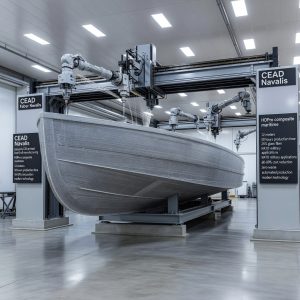
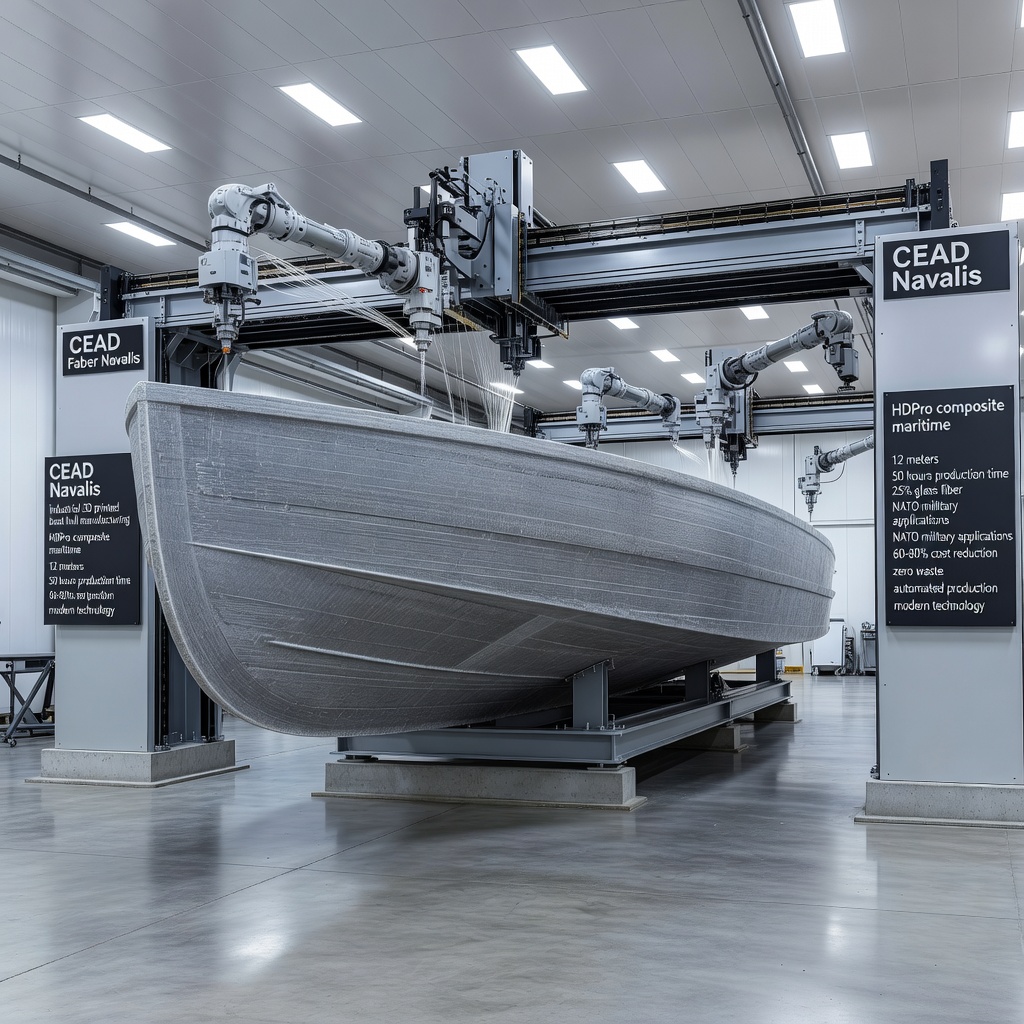
That paradigm is now shifting. CEAD, a Dutch company specializing in large-format additive manufacturing, is fundamentally transforming how boats are built. Their Faber Navalis system represents the world’s first application-ready solution for industrial-scale 3D printing of entire boat hulls—without molds, without joins, without manual labor.
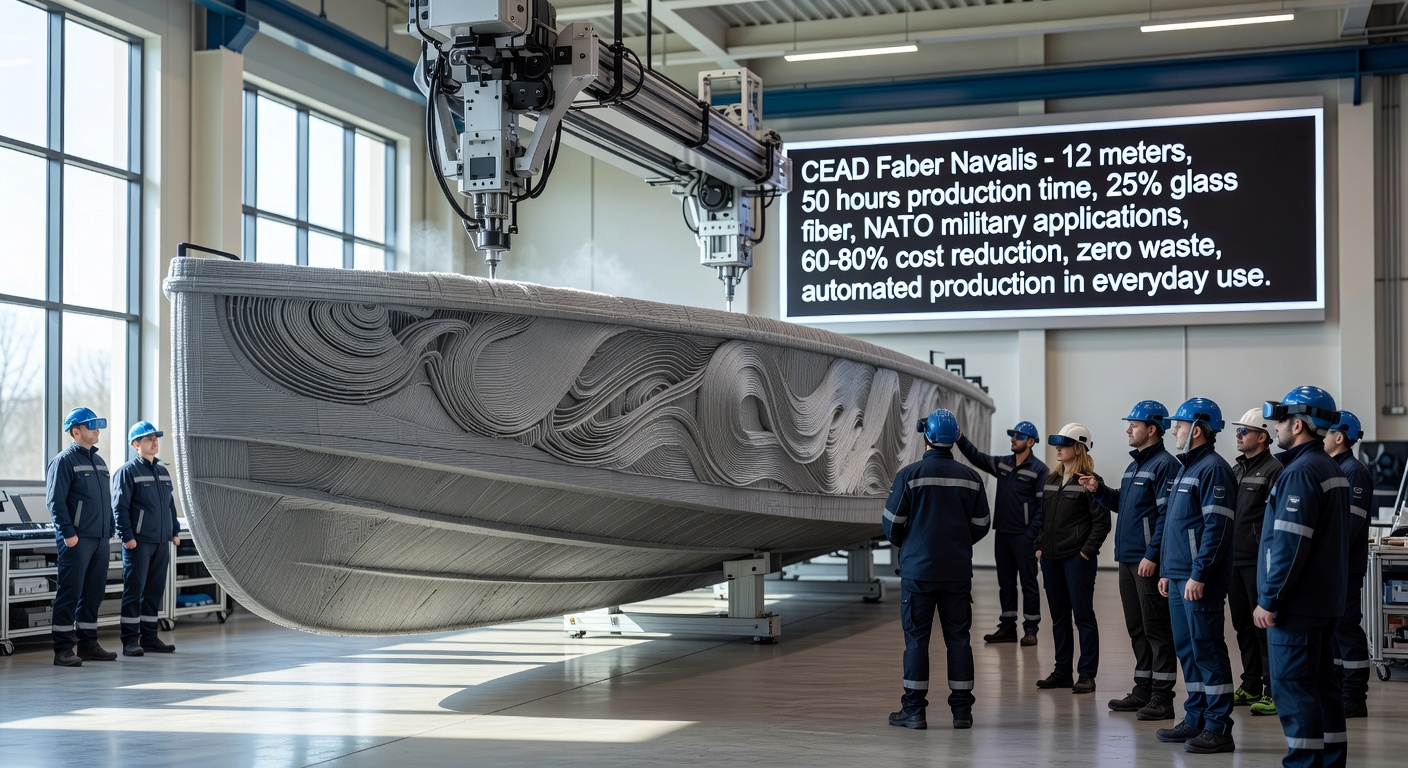
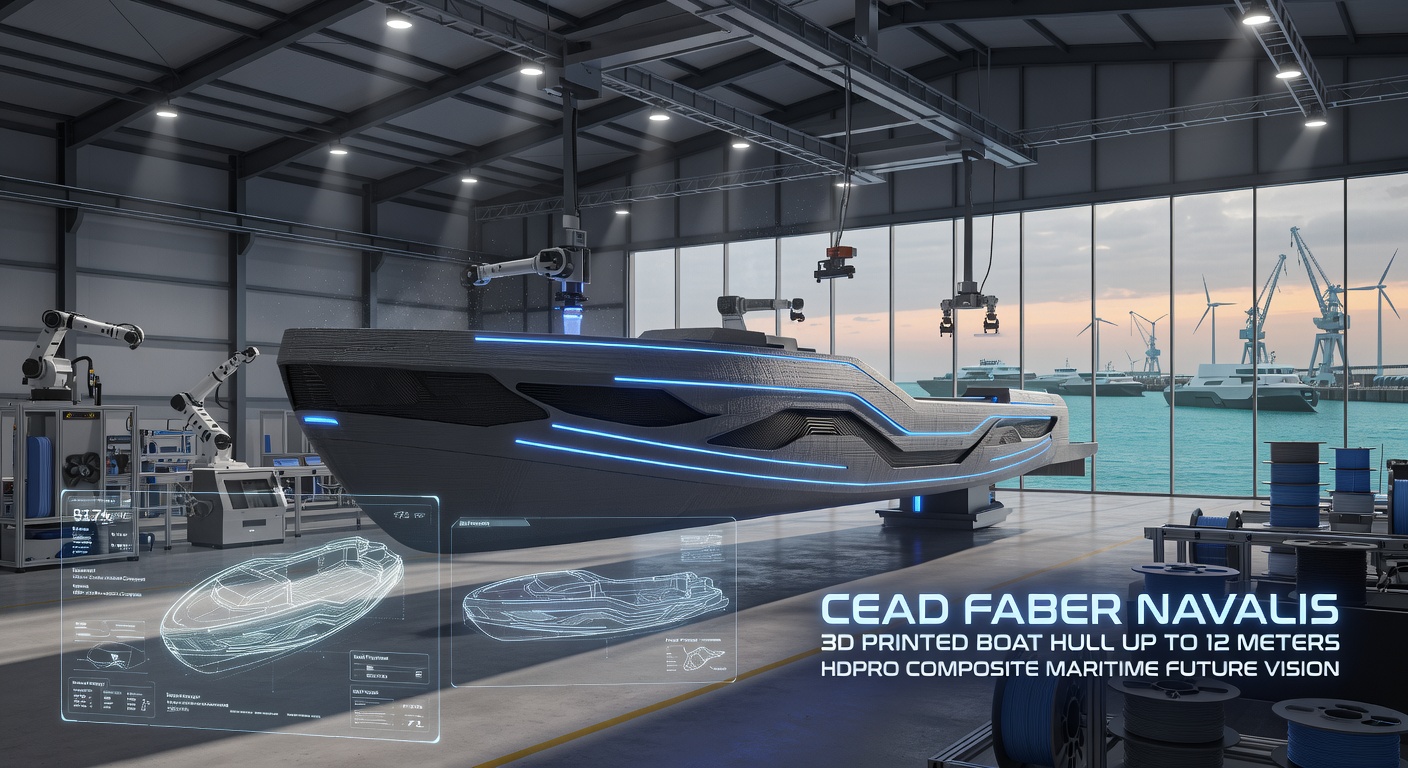
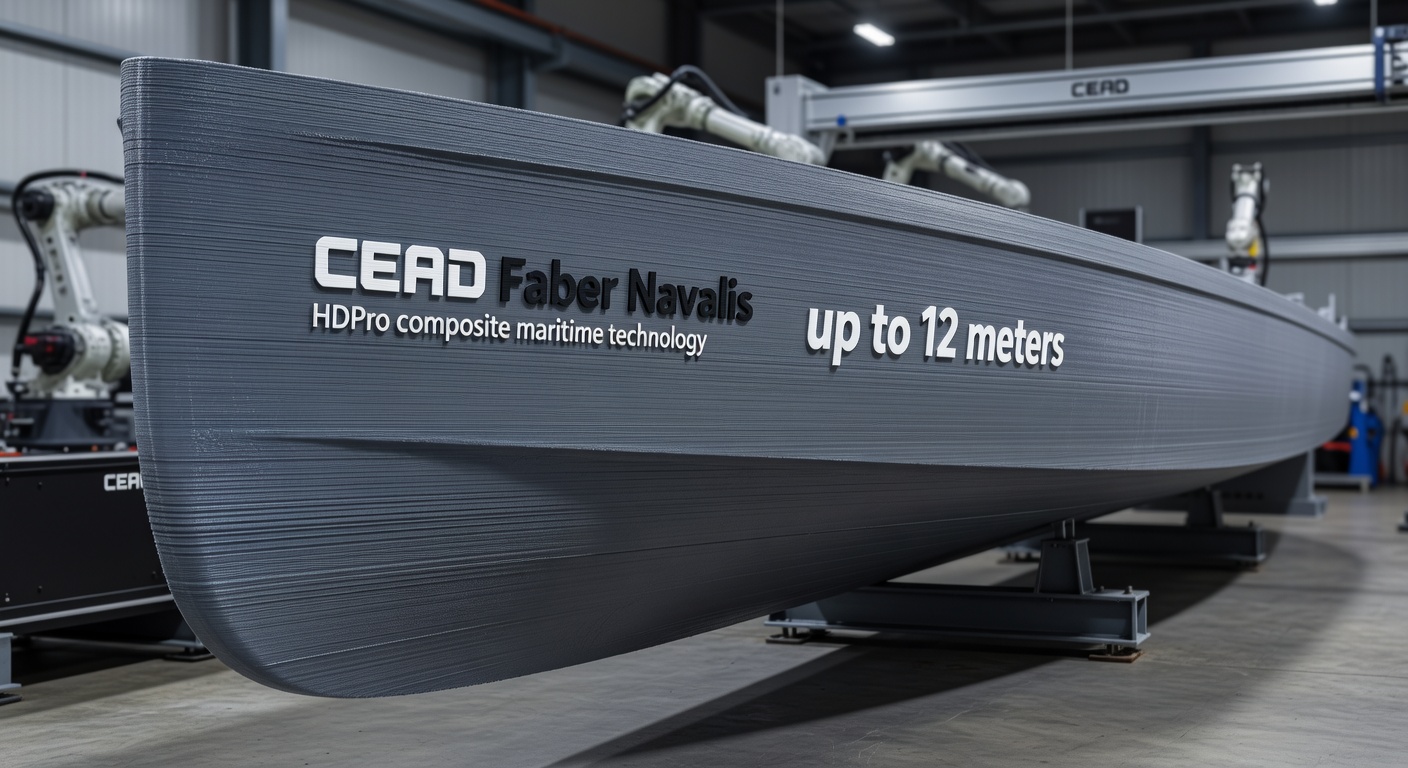
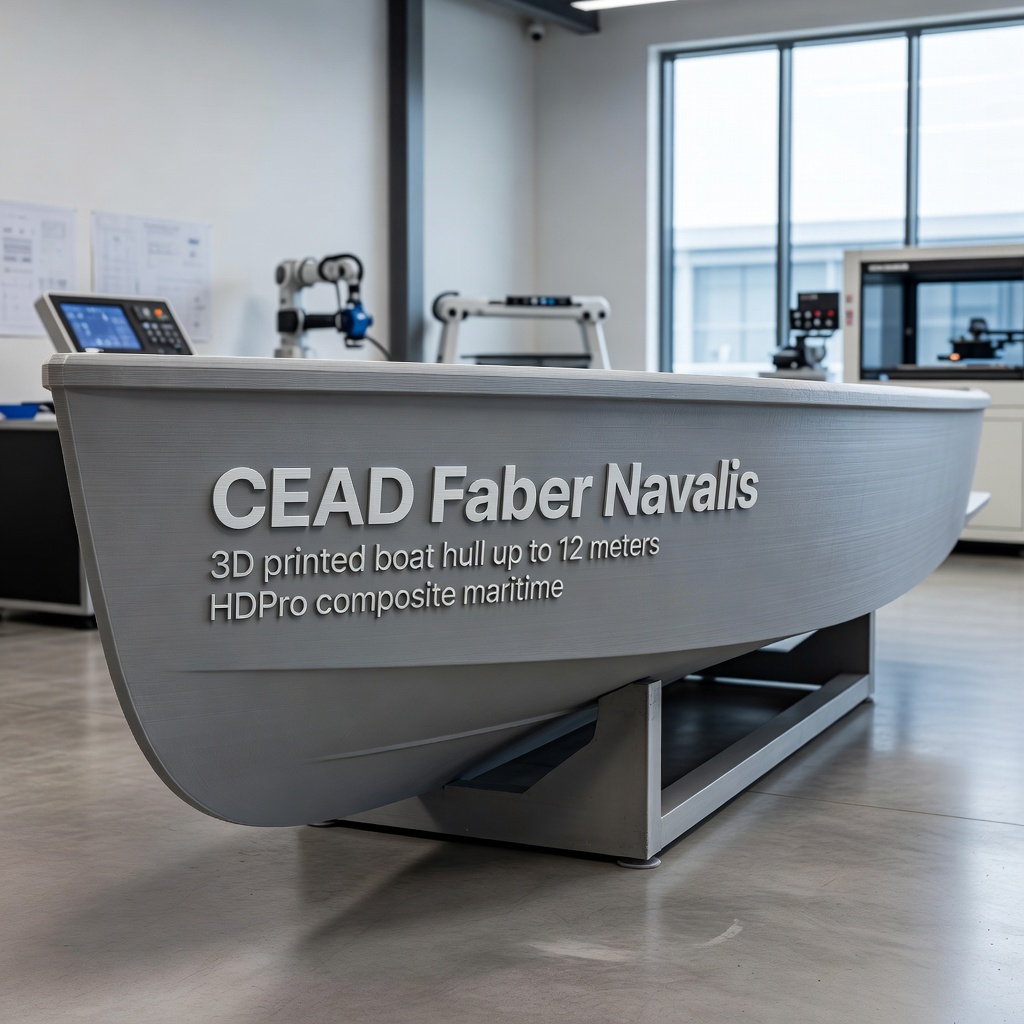
Using Large Format Additive Manufacturing (LFAM) technology, Faber Navalis can produce hulls up to 12 meters in length and 4 meters in width in a single continuous printing process. This isn’t science fiction—it’s happening today. Evidence? A 12-meter RIB (Rigid Inflatable Boat) was printed in just 8 days during the NATO Bold Machina exercise, demonstrating real-world applicability for defense and industrial applications.
Technical Specifications: What Faber Navalis Can Do
The Faber Navalis isn’t just a larger 3D printer—it’s a complete closed-loop production ecosystem that combines:
- Patented CEAD Hardware – Robotic extrusion systems purpose-built for marine applications
- CEAD HDPro Material – Proprietary fiber-reinforced composite formulated specifically for hulls
- Flexcube Maritime Software – Dedicated workflow for design-to-production pipeline
- Real-Time Quality Control – Continuous monitoring and process optimization
Dimensions and Performance
- Maximum Length: 12 meters (39 feet)
- Maximum Beam: 4 meters (13 feet)
- Print Time for 6m Hull: Approximately 50 hours (continuous operation)
- Print Time for 19ft Hull (5.7m): 88 hours
- Operation Mode: 24/7 unmanned production
- Automation Level: Start the machine, return 50 hours later to a finished hull
Flexcube Maritime: USV Solutions up to 7.2m
For smaller vessels, particularly Unmanned Surface Vehicles (USVs), CEAD offers the Flexcube Maritime system. Optimized for the defense sector, it enables manufacturing of hulls up to 7.2 meters (23 feet) with beams up to 1.95 meters (76 inches).
During NATO-led exercises at the Royal Netherlands Navy harbor, this system proved its capability by printing 10 USV hulls (2.5 meters each) in less than one day—five hours per hull. The vessels were then outfitted and deployed the same day, demonstrating the rapid iteration potential of additive manufacturing for defense applications.
HDPro: The Material That Changes Everything
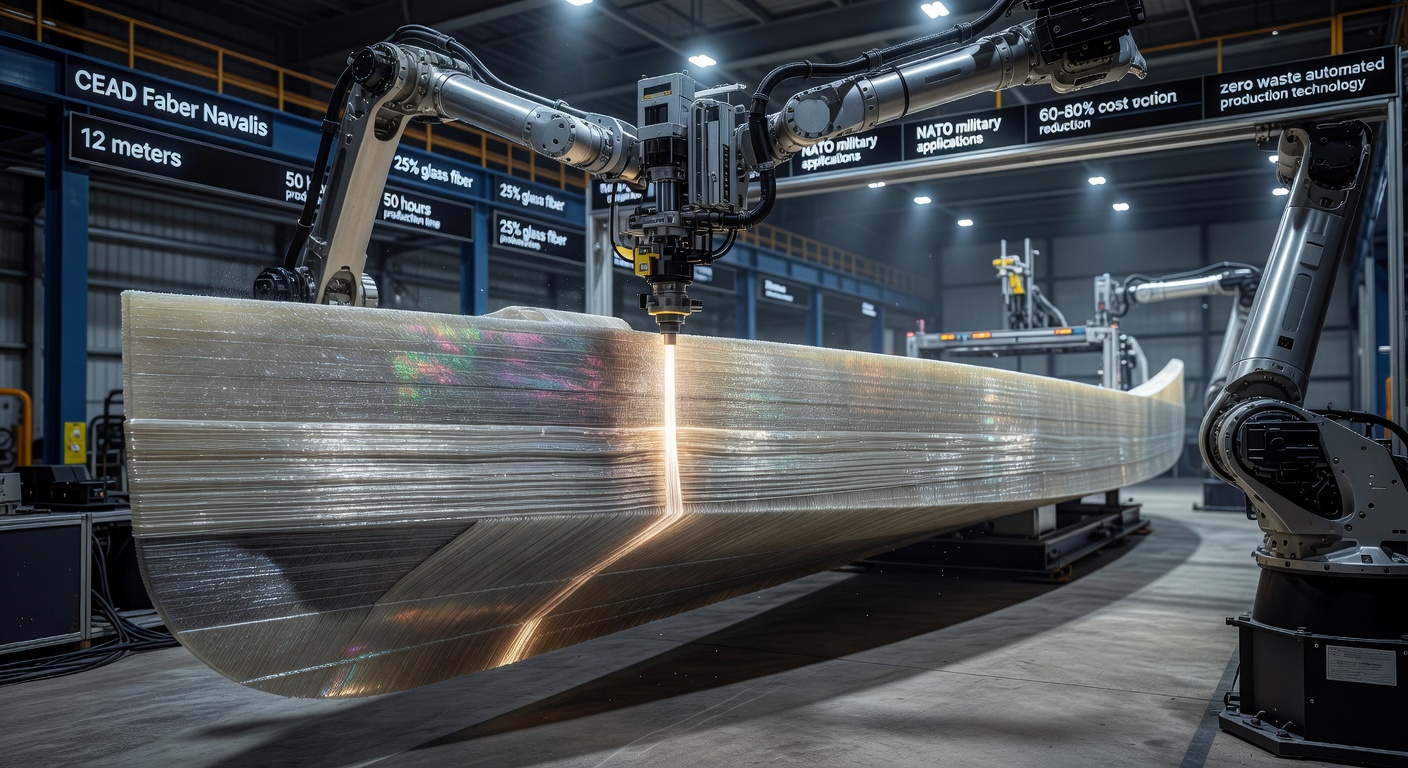
While the printing technology is impressive, the true breakthrough lies in the material. CEAD developed HDPro (Heavy-Duty for Maritime Applications)—a proprietary glass-fiber-reinforced thermoplastic composite specifically formulated for large-scale 3D printed hulls. This isn’t a repurposed industrial plastic; it’s a purpose-built solution that outperforms traditional marine materials across virtually every metric.
Material Composition
- Base Polymer: HDPE (High-Density Polyethylene) – already proven in marine applications
- Fiber Reinforcement: 25% Glass Fiber content
- Additives: UV stabilizers, impact modifiers
Mechanical Properties
HDPro delivers exceptional performance characteristics that make it ideal for demanding marine environments:
- Impact Resistance: Can withstand heavy impacts without damage or cracking—critical for military and industrial applications where vessels encounter rough conditions
- Strength: 2x greater tensile strength compared to unfilled HDPE, while only 10% heavier
- Stiffness: 2x greater flexural modulus than standard HDPE, providing structural integrity under load
- Fatigue Resistance: Superior cyclic loading performance—important for vessels operating continuously
Environmental Resistance
Marine environments are unforgiving, exposing materials to constant salt water, UV radiation, biological growth, and mechanical stress. HDPro is engineered to handle all of these challenges:
- Zero Water Absorption: Unlike many thermoplastics that swell and weaken over time, HDPro maintains its dimensions and properties regardless of immersion
- Anti-Fouling Properties: Naturally resistant to marine growth (biofouling), reducing maintenance requirements and drag
- UV Stability: No additional coatings required for UV protection—the material maintains its properties under prolonged sun exposure
- Corrosion Resistance: Completely inert and non-corrosive—suitable for water tanks, fuel tanks, and saltwater exposure
- Temperature Tolerance: Performs across wide temperature ranges, from freezing waters to tropical conditions
Sustainability Advantages
In an era of increasing environmental consciousness, HDPro offers significant sustainability benefits:
- Recyclability: Material from failed prints or end-of-life vessels can be shredded and reused in future prints—truly closing the manufacturing loop
- No Hazardous Resins: Unlike traditional fiberglass, which uses toxic polyester or epoxy resins, HDPro is a thermoplastic that doesn’t require harmful chemicals
- Waste Reduction: The example of Al Seer Marine’s printed boat—containing 67% recycled material—demonstrates the circular economy potential
Economic and Operational Benefits: The Business Case for Additive Manufacturing
The financial and operational advantages of Faber Navalis extend far beyond the novelty of 3D printing. This technology fundamentally reimagines the economics of boat building.
Cost and Time Reduction
Traditional boat hull manufacturing involves numerous cost drivers that additive manufacturing eliminates or dramatically reduces:
- Mold Costs: Traditional methods require expensive tooling—composite molds can cost €100,000 or more. Faber Navalis requires no mold whatsoever.
- Production Time: 60-80% reduction in production time compared to traditional methods. What once took weeks now takes days.
- Labor Costs: Once the print job starts, the system operates autonomously. A single operator can manage an entire production facility.
- Material Waste: Traditional methods generate significant waste through cutting, trimming, and rework. Additive manufacturing uses material only where needed—near-zero waste.
- Inventory Costs: On-demand production eliminates the need for extensive spare part inventories or stored molds.
Performance Advantages
Beyond cost savings, 3D printed hulls offer superior performance characteristics:
- Weight Reduction: Printed hulls are approximately 10% lighter than equivalent fiberglass laminates—improving fuel efficiency, speed, and payload capacity
- Design Freedom: Complex internal structures (frames, stringers, bulkheads) can be printed as part of the hull in a single operation—eliminating assembly of separate components
- Customization: Every hull can be unique without additional tooling cost—enabling mass customization
- Consistency: Automated production ensures repeatable quality—eliminating human variability
Local Manufacturing Benefits
The ability to produce hulls locally offers strategic advantages:
- Transportation Savings: Eliminates costly transport of large boat hulls
- Supply Chain Resilience: Reduced dependence on global supply chains and foreign manufacturing
- Rapid Iteration: Design changes can be implemented in hours, not weeks
- Intellectual Property Protection: Designs don’t need to be sent overseas
NATO and Defense Applications: Combat-Proven Technology
The defense sector has quickly recognized the strategic value of large-scale 3D printing. CEAD’s technology has been validated through real-world military exercises and operations.
NATO Bold Machina Exercise
At the NATO maritime innovation platform Bold Machina in Den Helder, Netherlands, stakeholders from across NATO gathered to accelerate capability development for maritime special forces. The results were remarkable:
- A full-scale 12-meter RIB was produced in just 8 days
- Integration of operators, engineers, and industry from multiple NATO nations
- Real-time design iterations based on operational feedback
- Complete operational deployment within days of concept
Royal Netherlands Navy Demonstration
During a NATO-led exercise at the Harbor of the Royal Netherlands Navy, CEAD demonstrated deployable manufacturing capability:
- Installation Time: Less than 1 day from arrival to production
- Production Output: 10 USV hulls (2.5 meters each) printed in one day
- Print Time per Hull: Approximately 5 hours each
- Design Iterations: 3 different designs printed and evaluated during the exercise
- Deployment: All vessels outfitted and deployed the same day
This demonstration proved that large-scale 3D printing is not just viable for defense—it’s operationally ready. The ability to manufacture vessels in the field, close to the point of need, represents a fundamental shift in military logistics.
Strategic Implications
For defense organizations, this technology offers:
- Rapid Capability Response: Produce needed vessels in days, not months
- Field Deployable: Manufacturing can follow the troops
- Logistical Independence: Reduced reliance on pre-positioned inventory and long supply chains
- Mission-Specific Design: Customize vessels for specific operational requirements
Traditional vs. 3D Printed: A Direct Comparison
To fully appreciate the magnitude of this transformation, consider the fundamental differences between traditional boat building and Faber Navalis additive manufacturing:
| Parameter | Traditional Construction | Faber Navalis 3D Printing |
|---|---|---|
| Mold/Tooling | Expensive mold required (€100,000+) | No mold needed |
| Production Time | Weeks to months | 50-88 hours |
| Labor Intensity | High (lamination, joining, finishing) | Minimal (supervised automation) |
| Material Waste | Significant (cutting, trimming) | Near-zero waste |
| Hull Weight | Standard | ~10% lighter |
| Customization | Limited by tooling | Full customization (CAD to part) |
| Internal Structure | Separate components assembled | Printed integral in single operation |
| Design Iteration | Slow and expensive | Hours to implement |
| Production Location | Specialized facilities | Anywhere with machine |
The Future of Boat Building: Implications and Outlook
Faber Navalis represents more than a new technology—it signals a fundamental paradigm shift in the maritime manufacturing industry. Several key implications emerge:
Democratization of Production
Historically, boat building required massive capital investment in facilities, tooling, and skilled labor. Large-scale 3D printing dramatically lowers these barriers. A small team with a Faber Navalis system can now compete with large shipyards—a transformative opportunity for entrepreneurs and smaller manufacturers.
The Micro-Factory Model
Imagine an entire boat factory that operates with just a handful of people, producing hulls on demand, with complete customization, minimal waste, and lower capital investment. This isn’t speculative—it’s being implemented today. CEAD’s technology platform enables easy scaling while maintaining flexibility in product offerings.
Sustainable Manufacturing
The environmental advantages are substantial:
- Material Efficiency: Only the material needed is used
- Recyclability: End-of-life vessels can be recycled into new prints
- Reduced Transport: Local production eliminates long-haul logistics
- No Toxic Resins: Thermoplastic processing avoids hazardous chemicals
Defense Strategic Advantage
For military applications, the ability to produce vessels on demand, in the field, represents a strategic capability. Supply chains become more resilient, response times shorten, and mission-specific designs become practical. Nations that adopt this technology will have significant operational advantages.
Industry Transformation Timeline
We can expect adoption to proceed in phases:
- Now: Defense, USV, and specialized industrial applications
- Near-term (1-3 years): Commercial vessel manufacturers, marine robotics
- Medium-term (3-5 years): Mainstream boat builders, yacht manufacturers
- Long-term (5-10 years): Potential for very large vessels as technology scales
Conclusion: A Pivotal Moment for Maritime Manufacturing
The maritime industry stands at an inflection point. CEAD’s Faber Navalis system demonstrates that the centuries-old craft of boat building can be fundamentally transformed through additive manufacturing. The results speak for themselves: hulls that are lighter, stronger, cheaper to produce, faster to deliver, and more environmentally sustainable.
For boat builders, this technology represents both a challenge and an opportunity. Those who embrace large-scale 3D printing will gain significant competitive advantages. Those who resist may find themselves increasingly marginalized.
The question is no longer whether 3D printing will transform boat building—it’s who will lead this transformation. The Netherlands, through CEAD, has established an early lead. The rest of the industry is watching, and the pace of adoption will determine who thrives in the new era of maritime manufacturing.
The future of boat building isn’t just being printed—it’s being reimagined entirely.